
Buying a quadplex could be the smartest move you make as an Airbnb investor in 2025 – especially if you’re tired of watching single-family investors struggle with cash flow while you know there’s a better way.
The short-term rental market is evolving fast. Supply growth slowed to just 6.8% in 2024 (down from 22.1% in 2022) as high interest rates and home prices made new listings harder to acquire. But here’s the catch – demand jumped 7%, pushing revenue per available room up 3.4%. Translation: the investors who moved strategically on multi-unit properties are cleaning up while everyone else scrambles for scraps.
A quadplex – four separate units under one roof – gives you multiple income streams, economies of scale, and the ability to diversify your rental strategy across units. Live in one, short-term rent two, medium-term the fourth. Or go full STR and maximize your revenue potential across all four doors.
Contents
- What Is a Quadplex? (And Why Airbnb Investors Love Them)
- How Much Does a Quadplex Cost? (Breaking Down the Real Numbers)
- How to Buy a Quadplex: Your Step-by-Step Acquisition Strategy
- Cost to Build a Quadplex vs. Buying Existing
- Financing Your Quadplex: Real Options for Real Investors
- Managing Your Quadplex for Maximum STR Revenue
- Common Quadplex Buying Mistakes (And How to Avoid Them)
- Is Buying a Quadplex Worth It for Airbnb Investors?
- FAQs About Buying Quadplexes for STR Investing
What Is a Quadplex? (And Why Airbnb Investors Love Them)
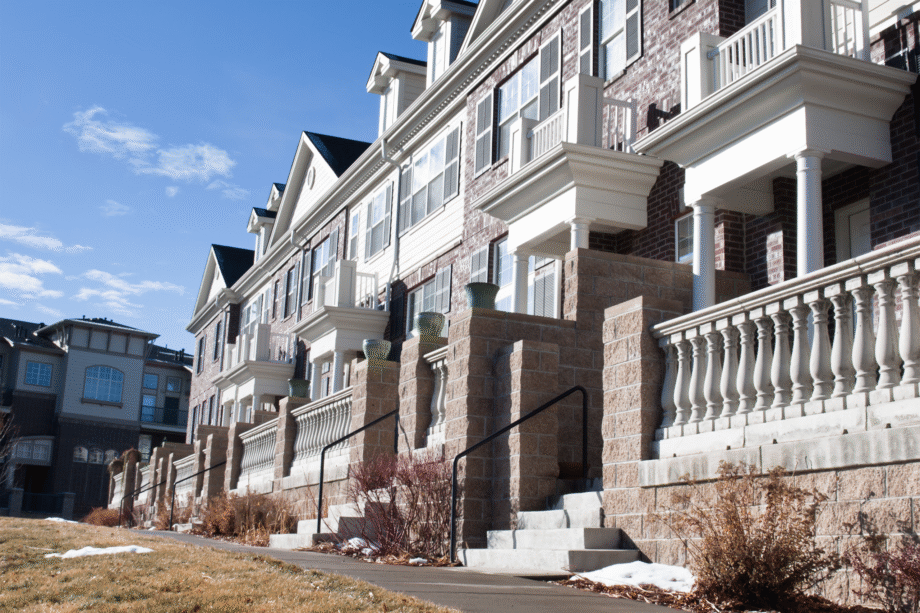
A quadplex (also called a fourplex or quadruplex property) is a single residential building divided into four completely separate living units. Each unit has its own entrance, full kitchen, bathroom, and living spaces – essentially four independent homes sharing common walls and one roof.
Unlike apartment buildings with five or more units, quadplexes qualify for residential financing. That’s huge. You can secure a conventional mortgage or even an FHA loan with as little as 3.5% down if you plan to live in one unit, rather than the commercial financing required for larger properties.
For Airbnb investors, quadplexes offer unmatched flexibility. You can:
- Mix rental strategies – run two units as short-term rentals during peak season, keep one as a medium-term corporate rental, and use the fourth as your primary residence to qualify for better financing
- Spread your risk – if STR regulations tighten in your market (and they will), you can pivot units to long-term or medium-term rentals without losing your entire income stream
- Scale faster – buying four units at once beats acquiring four separate properties over years, especially when interest rates and competition remain fierce
The layout varies: units can be stacked (two per floor), arranged side-by-side, or a combination. The key requirement? Four separate entrances with individual locks, four kitchens, and typically four utility meters.
How Much Does a Quadplex Cost? (Breaking Down the Real Numbers)
Purchase prices for quadplexes swing wildly based on location, condition, and local market dynamics. Budget-conscious investors can find properties starting around $200,000 to $400,000 in smaller markets, while prime STR locations like Nashville, Austin, or coastal markets can easily push past $1 million.
In 2025, FHA loan limits for fourplexes are $1,008,300 in low-cost areas and up to $2,326,875 in high-cost markets like Manhattan. Conventional loans max out at $1,551,250 in standard areas, with higher limits in expensive metros.
Here’s what matters for Airbnb investors: the purchase price is only part of your equation. You need to factor in renovation costs to make units STR-ready (think $15,000 to $50,000 per unit for furniture, amenities, and professional setup), ongoing operating expenses, and your financing costs.
Use tools like our vacation rental ROI calculator or cash-on-cash return calculator to run numbers before you commit. The goal? Positive cash flow from day one, or at minimum, a clear path to profitability within 12-18 months.
How to Buy a Quadplex: Your Step-by-Step Acquisition Strategy
1. Get Your Financing Locked Down First
Don’t waste time touring properties until you know exactly what you can afford. For owner-occupied quadplexes, FHA loans require just 3.5% down with a 580+ credit score, but you must live in one unit for at least 12 months. Conventional loans need 5% down for owner-occupants or 15-25% for investment properties.
Here’s the power move: FHA allows you to use projected rental income from the other three units (minus a 25% vacancy factor) to qualify for the loan. If each unit rents for $1,500/month, you can count $3,375 toward your qualifying income. That’s massive leverage for first-time investors.
Key financing requirements in 2025:
- Credit score: 580+ for FHA (3.5% down), 620+ for conventional
- Debt-to-income ratio: Under 43% preferred
- Reserves: 3 months of PITI (principal, interest, taxes, insurance) required for 3-4 unit properties
- Property standards: Must pass FHA appraisal showing the property is safe, sound, and livable
Work with a lender experienced in multi-unit financing – not every loan officer understands the nuances of rental income calculations and quadplex guidelines.
2. Find Markets Where Quadplexes Actually Make Money
AirDNA’s 2025 research shows small and mid-sized cities saw 16% growth in STR listings, while mid-sized markets grew 10.3%. These areas offer lower entry costs, less competition, and often friendlier STR regulations than major metros.
Target markets with:
- Low hotel inventory – areas without massive hotel supply let STRs capture more demand and command higher rates
- Strong demand drivers – universities, medical centers, corporate relocations, tourism, or outdoor recreation
- Reasonable property prices – aim for markets where you can buy in under $750,000 and still achieve 8-12% cash-on-cash returns
- STR-friendly regulations – verify local laws before you buy (check our city-specific guides for regulations)
Don’t just chase your favorite vacation spot. The best STR markets combine strong fundamentals with realistic acquisition costs.
3. Evaluate Properties Like a Pro
When you tour potential quadplexes, bring a contractor and think through each unit’s STR potential. Ask yourself:
- Can each unit function independently? – separate entrances, individual utilities, sound insulation between units
- What’s the renovation scope? – structural issues kill deals fast; cosmetic updates you can handle
- How’s the location score? – proximity to attractions, walkability, parking availability, neighborhood safety
- What’s the current income? – if units are rented long-term, calculate what they could earn as STRs using comparable listings
Run a DSCR calculation (debt service coverage ratio) to confirm the property can support your loan payments from rental income alone. Lenders want to see 1.25x or higher.
Request financial records (if available), recent inspection reports, utility bills, and property tax history. Surprises cost money – due diligence saves it.
4. Make Your Offer Strategic, Not Emotional
The deal isn’t done until you close, and sellers in 2025 still have leverage in many markets. Your offer should reflect:
- Current cash flow (if occupied)
- Repair needs identified during inspection
- Comparable sales in the area
- Your financing terms and timeline
Include contingencies for financing and inspection. If you’re using FHA financing, properties must meet minimum property standards – factor in any required repairs before closing.
Don’t be afraid to walk away if the numbers don’t work. There’s always another deal, but a bad quadplex purchase can drain your capital for years.
5. Close and Immediately Execute Your STR Strategy
Once you own the property, move fast. Every day units sit empty is lost revenue. Your immediate priorities:
Set up operations:
- Get proper STR insurance coverage (standard homeowners policies won’t cut it)
- Register for local business licenses and STR permits
- Set up separate LLC protection if your attorney recommends it
- Open dedicated business bank accounts
Prepare the units:
- Furnish and outfit each unit for your target guest (see our guide on maximizing STR income)
- Install smart locks, security cameras (exterior only), and noise monitoring
- Hire a professional photographer – listing photos make or break your bookings
- Write compelling descriptions highlighting unique amenities and location benefits
Launch your listings:
- List on multiple platforms (Airbnb, Vrbo, Booking.com) to maximize exposure
- Price competitively to build reviews quickly – you can raise rates once you have 10-15 five-star reviews
- Consider dynamic pricing software to optimize revenue
- Respond to inquiries within 1 hour to boost conversion rates
The fastest path to profitability is immediate execution. Don’t sit on vacant units “getting ready” for months.
Cost to Build a Quadplex vs. Buying Existing
Some investors consider building new rather than buying existing quadplexes. Let’s be real about the numbers.
Construction costs for a fourplex range from $400,000 to $1 million, with the average around $750,000. That’s just construction – add land acquisition ($40,000+), permits ($10,000-$40,000), architect fees, and financing costs.
Per-square-foot costs vary significantly:
- Basic construction: $100-$200 per square foot for single-story
- Two-story builds: $140-$250 per square foot
- High-end finishes and amenities: $200-$300+ per square foot
Total project costs typically land between $190,000 and $700,000, but can exceed $2 million in high-cost areas or with premium construction.
The reality check: Building takes 12-18 months minimum. That’s 12-18 months of zero income while you’re burning holding costs. Unless you’re in a market with zero existing inventory or you have specific design needs (like targeting large groups with specific layouts), buying existing makes more financial sense for most Airbnb investors.
The exception? If you can find land cheap and build for under $150 per square foot while comparable existing properties sell for $250+ per square foot, new construction might work. Run the numbers carefully.
Financing Your Quadplex: Real Options for Real Investors
Owner-Occupied FHA Loans
The most accessible entry point for new investors. FHA loans for fourplexes offer:
- 3.5% down payment with 580+ credit score
- Ability to use projected rental income (75% of fair market rent) to qualify
- Lower interest rates than investment property loans
- Mortgage insurance requirement (0.55% annual MIP for most loans)
The trade-off: You must occupy one unit as your primary residence for at least 12 months. But smart investors use this year to establish their STR business, build reviews, and then move to another property while converting their unit to a fourth rental.
Conventional Loans
For investors who don’t want owner-occupancy restrictions or who’ve already used FHA financing:
- 5% down for owner-occupants, 15-25% for pure investment properties
- Higher loan limits than FHA ($1,551,250 in most areas for fourplexes)
- No mortgage insurance if you put 20%+ down
- Stricter qualification standards than FHA
Conventional loans work well for established investors with strong credit and capital to deploy.
DSCR Loans
Debt Service Coverage Ratio loans evaluate the property’s income potential rather than your personal income. Perfect for investors with multiple properties or self-employment income that’s hard to document.
- Typically require 20-25% down
- Rates run 0.5-1% higher than conventional loans
- Qualify based on projected rental income vs. debt obligations
- No personal income verification needed
Creative Financing Options
When traditional loans don’t work, consider:
Seller financing: Owner carries the note, often with more flexible terms than banks. Rare but powerful when available.
House hacking: Buy with FHA, live in one unit, use the rental income to save aggressively, then refinance or get a HELOC to fund your next property within 12-18 months.
Partnership structures: Pool capital with other investors to buy larger, better-located properties you couldn’t afford solo. Structure equity splits based on capital contributions and sweat equity.
Whatever route you choose, lock in your financing before you start making offers. Pre-approval isn’t optional in competitive markets.
Managing Your Quadplex for Maximum STR Revenue
You bought the property – now comes the real work. Successful quadplex STR operators obsess over three things:
1. Revenue Optimization
Don’t leave money on the table with lazy pricing. Use dynamic pricing software (Wheelhouse, PriceLabs, Beyond Pricing) to automatically adjust rates based on demand, seasonality, local events, and competitor pricing.
Professional operators saw revenue jump when they implemented dynamic pricing and invested in experience-driven amenities. One investor spent $150,000 on amenities (fire pit, basketball court, movie theater) at a property that now books for $1,400/night in a secondary market.
Quick wins for higher revenue:
- Professional photography (invest $500-1,000 per unit)
- Unique amenities that create Instagram moments
- Exceptional reviews through obsessive guest service
- Multi-platform listing (Airbnb + Vrbo + Booking.com)
- Automated messaging with personal touches
2. Efficient Operations
Managing four units means 4x the work – unless you systematize everything. Invest in:
- Property management software (Hospitable, Guesty, OwnerRez) to centralize bookings, messaging, and cleaning schedules
- Smart home tech – remote locks, smart thermostats, noise monitors
- Automated messaging – pre-written templates for booking confirmations, check-in instructions, and checkout reminders
- Reliable cleaning team – your reviews live or die on cleanliness; pay well for consistency
Consider hiring a local property manager if you’re remote investing. Expect to pay 15-30% of revenue, but good managers earn their keep through higher occupancy and better guest experiences.
3. Strategic Unit Mix
Don’t assume all four units should run the same rental strategy. Smart investors diversify:
- Units 1-2: Pure STR during peak seasons (maximum revenue)
- Unit 3: Medium-term rental (30-180 days) targeting corporate travelers, travel nurses, or digital nomads – stable income without daily turnover
- Unit 4: Your owner-occupied unit (if required) or long-term tenant to provide baseline cash flow
This mix protects you if regulations change, seasonality hits hard, or market conditions shift. You’re never dependent on one revenue model.
Common Quadplex Buying Mistakes (And How to Avoid Them)
Mistake #1: Buying in an STR-Restricted Market
Do your homework on local regulations BEFORE you make offers. Cities are cracking down on short-term rentals with caps, permit systems, and owner-occupancy requirements. Check our location-specific guides for current regulations.
If regulations are uncertain, buy in areas with clear, established STR rules or where you can profitably pivot to medium or long-term rentals.
Mistake #2: Underestimating Startup Costs
Buying a quadplex is expensive. Beyond the down payment and closing costs, budget for:
- Furnishing four units: $15,000-$50,000 each
- Initial marketing and photography: $3,000-$5,000
- Insurance, licenses, and permits: $2,000-$10,000
- Maintenance reserves: 6 months of operating expenses minimum
- Software and technology: $100-$500/month
Run out of capital before your first booking, and you’re dead in the water.
Mistake #3: Ignoring Property Management from Day One
“I’ll just manage it myself” works for one property. Four units with constant turnover? You’ll burn out fast.
Either hire professional management or invest heavily in automation and systems from the start. Your time is valuable – spend it finding the next deal, not changing sheets at 11 PM.
Mistake #4: Neglecting the Guest Experience
Average properties get average reviews. Average reviews mean lower occupancy and rates. The top 50% of STR operators are crushing it while the bottom 50% struggle – the difference is often execution, not location.
Invest in:
- Quality mattresses and linens
- Fast WiFi (this is non-negotiable)
- Thoughtful local guides and recommendations
- Quick response times to guest messages
- Solutions to problems before guests have to ask
Five-star experiences create five-star reviews, which drive bookings and premium pricing.
Is Buying a Quadplex Worth It for Airbnb Investors?
Here’s the truth: Buying a quadplex in 2025 is one of the fastest ways to build a meaningful STR portfolio – IF you execute correctly.
The numbers work. With FHA financing requiring just 3.5% down, you can control four income-producing units for a fraction of what four separate properties would cost. The residential financing advantage saves you tens of thousands in interest over the loan term compared to commercial rates.
The flexibility is unmatched. Mix and match rental strategies across units. Test different approaches. Pivot when regulations or market conditions change. You’re not locked into a single strategy like you would be with a traditional apartment building.
The risk is real, though. Managing four units takes systems, capital reserves, and relentless attention to operations. STR regulations continue tightening in popular markets. Competition for guests remains fierce. Half-assed operators fail quickly.
But for investors who do their homework, buy in solid markets, and execute on guest experience? Quadplexes offer a legitimate path to six-figure annual revenue from a single property.
The market isn’t getting easier. Interest rates are moderating but remain elevated. Home prices continue climbing. Competition for quality properties intensifies daily.
The investors who win are the ones who move decisively when they find solid deals – not the ones who wait for perfect conditions that never arrive.
FAQs About Buying Quadplexes for STR Investing
What is a quadruplex property?
A quadruplex (or quadplex/fourplex) is a residential building divided into four completely separate living units. Each unit has its own entrance, kitchen, bathroom, and living spaces. All four units share common walls and one roof but function as independent homes – think of it as four houses stacked or arranged side-by-side under one structure.
What’s a quadplex vs. a duplex or triplex?
The difference is simple: number of units. A duplex has two units, a triplex has three, and a quadplex has four. All three qualify for residential financing (1-4 units), but quadplexes offer more income diversification while staying under the five-unit threshold that would require commercial financing.
How much does a quadplex cost?
Quadplex prices vary dramatically by market. Expect $200,000-$400,000 in affordable markets, $400,000-$800,000 in mid-tier cities, and $800,000-$2 million+ in prime STR destinations or high-cost metros. FHA loan limits for fourplexes range from $1,008,300 to $2,326,875 depending on your county’s cost of living.
How much to build a quadplex?
Building a fourplex costs $400,000 to $1 million on average, plus land, permits, and soft costs. Construction runs $100-$250 per square foot depending on finishes, with total project costs ranging from $190,000 to over $2 million in expensive markets. For most Airbnb investors, buying existing properties makes more financial sense than new construction.
Can I use an FHA loan to buy a quadplex?
Yes – and it’s one of the best financing options for new investors. FHA loans for fourplexes require just 3.5% down if you have a 580+ credit score and plan to live in one unit for at least 12 months. You can use 75% of projected rental income from the other units to qualify for the loan, making it easier to afford than you might think.
What’s better for Airbnb – a quadplex or four separate properties?
Quadplexes win for most investors. One mortgage payment instead of four. One roof to maintain. Economies of scale on utilities, insurance, and property management. Faster acquisition (buying one property vs. four separate deals). The downside? You lack geographic diversification – all four units are in one location. But the financing advantages and operational efficiency usually outweigh this risk.
Do I need to live in a quadplex to get good financing?
Not necessarily, but it helps significantly. Owner-occupied financing (FHA or conventional) offers the best rates and lowest down payments. If you’re purely investing without living there, expect to put down 15-25% and accept slightly higher interest rates. Many investors use the owner-occupancy requirement strategically – live there for 12 months, establish the STR business, then move to repeat the process with another property.
Ready to find your first quadplex? Subscribe to The Offer Sheet to get the most unique and profitable STR investment opportunities delivered to your inbox 6x per week. Join 110,000+ investors who are building real wealth through strategic property acquisition.
Looking to maximize your returns? Upgrade to Pro for exclusive access to up to 40 hand-picked deals daily, digital resources, and direct connections to top agents, property managers, and mortgage brokers in every STR market nationwide.