
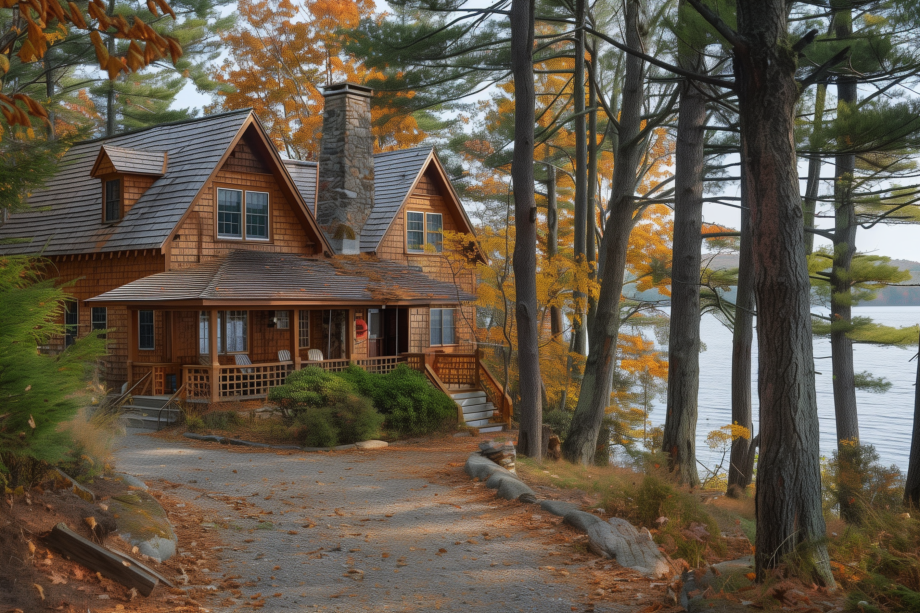
Thinking About Starting an Airbnb in Laconia?
🔥 Join 110,000+ real estate investors getting the most unique & profitable short-term rental investment opportunities delivered to your inbox, 6x/week. Subscribe Now
Disclaimer: This article is for informational purposes only and not legal advice. Regulations may have changed since publication. Always check with local authorities and consult a legal professional before making investment decisions.
Last Updated: October 2025
Contents
- Introduction to Short-Term Rentals in Laconia
- Current Short-Term Rental Permit Requirements in Laconia
- Zoning Regulations for STRs in Laconia
- Required Documentation for Laconia Short-Term Rentals
- Laconia Short-Term Rental Taxes
- Safety Requirements and Inspections in Laconia
- Laconia vs. Neighboring Lakes Region Communities: Regulation Comparison
- Enforcement of STR Rules in Laconia
- How to Start a Short-Term Rental Business in Laconia
- Advice from Successful Laconia STR Operators
- Who to Contact About Laconia STR Regulations
- Future Outlook for Laconia STR Regulations
- Ready to Invest in Laconia Short-Term Rentals?
Introduction to Short-Term Rentals in Laconia
Laconia, New Hampshire, sits at the heart of the state’s famed Lakes Region, offering direct access to Lake Winnipesaukee—New England’s largest lake—and serving as a gateway to countless outdoor adventures. From Motorcycle Week attracting hundreds of thousands of visitors to year-round water sports, skiing, and fall foliage tourism, Laconia experiences strong seasonal demand that makes it an attractive market for short-term rental investors.
However, Laconia has taken one of New Hampshire’s most distinctive approaches to STR regulation. Unlike many Lakes Region communities that allow relatively unrestricted vacation rentals, Laconia implemented owner-occupancy requirements in 2019 specifically designed to preserve residential neighborhoods and protect the city’s housing stock from investor-driven conversion to full-time vacation rentals.
Understanding Laconia’s evolving regulatory landscape is essential for anyone considering STR investment here. The city has been at the forefront of New Hampshire’s STR regulation conversation, with its ordinances cited statewide as either a model for community protection or—depending on perspective—an example of restrictive overreach. For investors, this means navigating a more complex framework than neighboring towns but also potentially benefiting from reduced competition in permitted zones.
This guide breaks down everything you need to know about legally operating a short-term rental in Laconia in 2025, from understanding which zones allow STRs to meeting the city’s owner-occupancy standards and navigating recent ordinance amendments.
Current Short-Term Rental Permit Requirements in Laconia
Laconia requires all short-term rental operators to obtain permits through the Planning Department:
Permit Application and Fees
- Short-Term Lodging Permit: Required from Laconia Planning Department
- Application fee: $250
- Permit valid for: 2 years
- Must be renewed biennially
- Covers city administrative costs including inspections
- Purpose of Regulation: According to the ordinance, permits are required “to preserve the traditional character of residential neighborhoods that can be negatively impacted by this type of use and to help preserve the quality and quantity of the housing stock for year-round residential use.”
Definition of Short-Term Rental
Laconia defines short-term lodging as rental of a dwelling unit for less than 30 consecutive days.
Application Requirements
To obtain a permit, property owners must submit:
- Completed application form
- Property information and ownership documentation
- Proof of owner-occupancy (where applicable)
- Fire and life-safety inspection scheduling
- Contact information for property management
- Parking plan demonstrating adequate off-street spaces
- Acknowledgment of occupancy limits and regulations
Inspection Requirements
All permitted properties must undergo:
- Fire and life-safety inspection before permit issuance
- Conducted by city-designated inspectors
- Verification of smoke detectors, carbon monoxide alarms, fire extinguishers
- Emergency egress compliance
- Re-inspection may be required at permit renewal
Owner-Occupancy Requirements: The Key Distinction
This is CRITICAL to understand about Laconia’s STR regulations:
Owner-occupied properties (owner resides at property at least 150 days per year):
- Considered an allowed accessory use in most zones
- Subject to permit requirements but have broader zone eligibility
- Must register with city every 2 years and pay $250 fee
- “Snowbirds” can qualify under the 150-day threshold
Non-owner-occupied properties:
- Permitted ONLY in Commercial Resort (CR) and Shorefront Residential (SFR) zones
- Prohibited in all other zones including most residential areas
- Cannot convert residential housing stock to full-time STR investment properties
This distinction fundamentally shapes Laconia’s STR market and is the ordinance’s primary mechanism for protecting year-round housing availability.
Special Exception Process
Properties that don’t meet owner-occupancy requirements outside permitted zones may appeal to the Zoning Board of Adjustment for special exception if:
- House has been rented short-term prior to December 2014 (grandfather clause), OR
- Granting exception provides “a general community benefit that rises above the financial gains of the applicant”
Special exceptions are difficult to obtain and evaluated case-by-case.
Seasonal Dwelling Unit Exception
Added by amendment, seasonal camps/cottages under 1,400 square feet may rent short-term:
- Only in RS, RG, and RR1 zones
- Maximum 15 separate rentals OR 120 nights, whichever comes first
- Only between May 1 – October 31
- Short-term rentals prohibited rest of year
- Intended for small family camps at lakeside
Zoning Regulations for STRs in Laconia
Understanding Laconia’s zone-specific rules is essential:
Zones Where STRs Are PERMITTED (Without Owner-Occupancy)
- Commercial Resort (CR) Zone:
- No limitations on number of rental periods
- Full-time STR investment properties allowed
- Concentrated at The Weirs (Laconia’s beachfront resort area)
- Traditionally commercial/tourism-oriented district
- Shorefront Residential (SFR) Zone:
- No limitations on number of rental periods
- Non-owner-occupied STRs permitted
- Lakefront/waterfront properties
- Recognizes tourism-oriented nature of waterfront areas
Zones Where STRs Are PROHIBITED (Unless Owner-Occupied)
STRs are banned in the following zones unless owner resides 150+ days/year:
- Industrial (I) – Completely prohibited
- Industrial Park (IP) – Completely prohibited
- Airport Industrial (AI) – Completely prohibited
- Residential Single-Family (RS) – Owner-occupied only
- Residential General (RG) – Owner-occupied only
- Residential Rural (RR1) – Owner-occupied only
- All other zones not specifically mentioned above
Current STR Distribution in Laconia
As of 2025, Laconia has:
- 93 approved short-term rentals officially registered with the city
- Heavy concentration at The Weirs (multiple properties including one 22-unit complex)
- Dispersed properties in downtown, Lake Opechee area, and around Paugus Bay
- Largest single property: 18-person capacity with 7 parking spaces (downtown)
- Properties range from small seasonal camps to multi-unit complexes
Accessory Dwelling Units (ADUs) Prohibition
Important restriction: Both ADUs granted by special exception AND the associated primary housing unit are prohibited from STR use in all zones.
This prevents property owners from creating ADUs specifically for short-term rental purposes.
Required Documentation for Laconia Short-Term Rentals
To operate legally, maintain these essential documents:
Local Requirements
- Laconia Short-Term Lodging Permit: Current 2-year permit from Planning Department
- Fire and Life-Safety Inspection Certificate: Passing inspection documentation
- Owner-Occupancy Documentation (if applicable):
- Proof of 150+ days annual residence
- Voter registration, utility bills, or other residency evidence
- Required for properties outside CR/SFR zones
- Parking Plan: Documentation showing adequate off-street parking
- Floor Plan: Showing sleeping areas, occupancy capacity, safety equipment
- Contact Information: Local contact reachable for emergencies
State Requirements
- New Hampshire Meals and Rooms Tax License:
- Required from NH Department of Revenue Administration
- Form CD-3 application
- Apply at least 30 days before operations begin
- Renewed annually by June 30
- Septic System Documentation (if applicable):
- NH ISDS Permit showing approval for occupant load
- Proof of satisfactory operation by NH Certified Septic System Evaluator
- Current Construction Approval from NH DES
- Water Quality Test Results (if not on public water):
- Annual test for total coliform and E. coli
- Must show absence of both
- From NH Environmental Laboratory Accreditation Program-accredited lab
Recommended Documentation
- Liability Insurance: Minimum $1,000,000 coverage strongly recommended
- Rental Agreements: Template agreements including all regulations
- Guest Rules and Emergency Information: Posted in property
- Tax Records: Detailed records of all rental income and collected taxes
Well-organized documentation streamlines permit applications, renewals, and any compliance reviews.
Laconia Short-Term Rental Taxes
New Hampshire’s tax structure for STRs is relatively straightforward compared to many states:
State Tax: Meals and Rooms Tax
- Rate: 8.5% of gross rental receipts
- Applies to: All rentals of 185 consecutive days or less
- Responsible party: Property owner/operator (unless platform collects)
Collection and Remittance:
- Register with NH Department of Revenue Administration
- File returns monthly or quarterly depending on volume
- Due by 15th of month following collection period
- Electronic filing encouraged (forfeiting commission if paper filing)
- Seasonal operators can apply to file only during operating months
Platform Collection
Major platforms like Airbnb and VRBO automatically collect and remit New Hampshire’s 8.5% Meals and Rooms Tax for hosts. However, hosts remain ultimately responsible for ensuring:
- Tax is actually being collected
- Correct amount is remitted
- Compliance with all filing requirements
- Direct bookings are properly taxed
No Additional Local Taxes
Unlike some tourist destinations, Laconia does not impose additional local lodging taxes beyond the state Meals and Rooms Tax.
Total tax rate: 8.5% (state only)
Occupancy Limits and Tax Implications
Laconia limits occupancy to:
- 9 people maximum for properties up to 1,400 square feet
- Additional capacity for larger properties based on sleeping area calculations
- 2 people per designated sleeping area plus additional persons
These limits affect both safety compliance and potential revenue.
Tax Penalties
Failure to properly collect and remit taxes can result in:
- Back taxes owed
- Interest charges
- Penalties under RSA 21-J:39
- Potential permit revocation
- Legal action by state revenue department
Many Laconia STR operators work with New Hampshire-based accountants familiar with Meals and Rooms Tax to ensure proper compliance.
Safety Requirements and Inspections in Laconia
Laconia enforces fire and life-safety standards through its inspection program:
Required Safety Equipment
Smoke Alarms:
- Required in each bedroom
- Outside each sleeping area in immediate vicinity
- On each additional story including basement and habitable attic
- Must be hardwired or 10-year sealed battery type
Carbon Monoxide Alarms:
- Required if property has attached garage OR fuel-fired appliances
- Install outside each bedroom in immediate vicinity
- Must meet NH state fire marshal requirements
Fire Extinguishers:
- Minimum one portable fire extinguisher required
- Mounted in accessible, prominent location
- Appropriate size/type for residential use
- Regular inspection/maintenance required
Emergency Egress:
- All bedrooms must have compliant emergency egress
- Clear, unobstructed exit paths
- Meets NH building and fire codes
Address Visibility:
- Property address clearly visible from street
- Essential for emergency services response
Inspection Process
- Pre-Permit Inspection:
- Schedule with Laconia inspectors before permit issuance
- Fire and life-safety compliance verification
- Building code review
- Septic system capacity confirmation (if applicable)
- Renewal Inspections:
- May be required at 2-year permit renewal
- Complaint-driven inspections possible anytime
- Re-inspection if violations found
- Inspection Costs:
- Included in $250 biennial permit fee
- City uses fee revenue to cover inspection costs
Septic System Requirements
For properties on septic systems:
- System must be adequate for proposed occupant load
- Current approval from NH Department of Environmental Services
- Proof of satisfactory operation required
- May limit maximum occupancy
Parking Requirements
- All parking must be off-street
- Must be within the STR property lot
- Adequate spaces for maximum occupancy
- Document in permit application
Laconia vs. Neighboring Lakes Region Communities: Regulation Comparison
How do Laconia’s regulations compare to other Lake Winnipesaukee area towns?
Gilford (North of Laconia)
- More recent regulations (adopted 2023)
- Targets non-owner-occupied commercial operators
- Requires conditional use permits (valid 3 years)
- Detailed requirements for capacity, parking, septic, trash
- More permissive than Laconia for non-owner-occupied properties
- No blanket owner-occupancy requirement
Meredith (Northwest of lake)
- Defines STRs as accessory use to single-family dwelling
- Conditional use permit required
- Less restrictive overall approach
- Tourism-oriented economy reflected in regulations
- Growing number of registered STRs
Alton (East of lake)
- Implemented own Short-Term Rental Permit system
- Annual permits with deadlines
- Fines for non-compliance
- Less emphasis on owner-occupancy than Laconia
Wolfeboro (East of lake)
- Off-street parking requirements (one space per bedroom)
- Safety and operational standards
- No blanket ban on non-owner-occupied properties
- More tourism-friendly approach
Weirs Beach (Laconia neighborhood)
- Within Laconia but treated differently
- Commercial Resort zone allows unlimited STRs
- Historic tourism area with hotels, motels, attractions
- Non-owner-occupied properties fully permitted
- Highest concentration of STRs in Laconia
Laconia’s Position: Among the most restrictive Lakes Region communities for residential areas while maintaining fully permissive zones at The Weirs. This dual approach attempts to balance tourism economy with housing preservation.
Enforcement of STR Rules in Laconia
Understanding how Laconia enforces its regulations:
Monitoring and Compliance
- Planning Director oversees STR program
- Tracking of all permitted properties
- Estimated 200+ properties listed on platforms like Airbnb (not all permitted)
- Annual reporting requirements being implemented
- Coordination with online platforms for compliance
Complaint Process
Laconia uses primarily complaint-based enforcement:
- Neighbors can report violations to Planning Department
- Code enforcement investigates substantiated complaints
- Police respond to noise/disturbance calls
- Fire department involved in safety violations
Common complaints include:
- Operating without permit
- Exceeding occupancy limits
- Noise disturbances/”party houses”
- Inadequate parking (overflow to street)
- Trash management issues
- Operating in prohibited zones
Notable Enforcement Example
The ordinance was partly triggered by 2019 complaints from Old North Main Street residents about a “party house” generating excessive noise throughout summer—demonstrating city responsiveness to neighborhood concerns.
Penalties for Violations
- Operating without permit: Cease and desist orders
- Permit revocation: For repeated or serious violations
- Fines: Monetary penalties for code violations
- Zoning violations: Can result in legal action
- Loss of grandfathered status: If cease operations
Special Exception Revocation
Properties operating under special exceptions face additional scrutiny:
- Must maintain community benefit standard
- Can lose exception for violations
- Subject to heightened enforcement
Recent Ordinance Amendments
The city continues refining its STR ordinance:
- 2025 amendments addressing conflicting language
- Annual audit process for permit holders
- Enhanced reporting requirements
- Clarification of permitted zones and processes
- Response to operational challenges identified since 2019
Relationship with State Legislation
Laconia officials have been vocal in statewide STR debates:
- Testified against Senate Bill 249 (would have prohibited local STR bans)
- Cited as example of balanced local regulation
- Program used as potential model for other communities
- Emphasized importance of local control over housing policy
How to Start a Short-Term Rental Business in Laconia
Navigate Laconia’s requirements with this comprehensive roadmap:
Step 1: Determine Zone Eligibility
CRITICAL FIRST STEP: Verify your property’s zoning and STR eligibility:
- Check property zone:
- Contact Laconia Planning Department: (603) 527-1265
- Review zoning map at City Hall or online
- Determine if property is in CR or SFR zone (unlimited STR rights)
- Assess owner-occupancy ability:
- Can you reside at property 150+ days annually?
- Do you intend to use as investment property only?
- Are you a “snowbird” who can meet 150-day threshold?
- Consider alternatives if non-conforming:
- Special exception application (difficult, requires community benefit)
- Property in different zone
- Long-term rental instead
- Seasonal camp exception (if under 1,400 sq ft in eligible zones)
Reality check: If you’re an investor planning to purchase property in residential Laconia zones for full-time STR use, Laconia’s regulations make this extremely difficult unless in CR/SFR zones or you can meet owner-occupancy requirements.
Step 2: Property Selection and Due Diligence
- The Weirs area offers easiest path for investor-owned STRs (CR zone)
- Waterfront properties in SFR zones allow non-owner-occupied STRs
- Residential neighborhoods: Only viable with 150-day occupancy commitment
- Seasonal camps: Small properties may qualify for May-October rentals
Due diligence checklist:
- Verify exact zoning classification
- Check septic system capacity
- Assess parking availability (must be off-street)
- Calculate potential occupancy based on square footage/sleeping areas
- Research comparable STR rates in area
- Consider seasonal vs. year-round viability
Step 3: Register for State Tax License
Before applying for local permit:
- Complete NH DRA Form CD-3:
- Application for Meals & Rentals Tax Operators License
- Available at NH DRA website
- Submit at least 30 days before operations
- Receive Tax License Number:
- Display conspicuously in property
- Include in all advertising/listings
- Required for local permit application
Step 4: Property Preparation
Before applying for city permit, ensure property meets all requirements:
- Install Safety Equipment:
- Smoke alarms in all required locations
- Carbon monoxide alarms (if applicable)
- Fire extinguisher in accessible location
- Verify all are functional and code-compliant
- Address Parking:
- Ensure adequate off-street parking
- Create parking plan/diagram
- May limit occupancy if parking insufficient
- Septic Verification (if applicable):
- Obtain current septic system documentation
- Verify capacity for proposed occupancy
- Get NH DES approval if needed
- May require septic system evaluation
- Water Testing (if on well):
- Arrange annual water quality testing
- Must show absence of coliform and E. coli
- Use NH-accredited lab
- Prepare Documentation:
- Floor plans showing sleeping areas
- Site plan with parking
- Ownership documentation
- Owner-occupancy evidence (if applicable)
Step 5: Apply for Laconia Permit
- Contact Planning Department:
- Phone: (603) 527-1265
- Visit: Laconia City Hall, 45 Beacon Street East
- Website: laconianh.gov/881/Short-Term-Rentals
- Hours: Monday-Friday 8:30 AM – 4:30 PM
- Submit Complete Application:
- Application form
- $250 fee (check payable to City of Laconia)
- All required documentation
- NH Meals and Rooms Tax License number
- Proof of owner-occupancy (if applicable)
- Schedule Inspections:
- City will coordinate fire and life-safety inspection
- Be present or have representative available
- Address any deficiencies promptly
- Await Permit Issuance:
- Processing time varies
- May require Planning Board review in some cases
- Permit valid for 2 years once issued
Step 6: Set Up Operations
Once permit is granted:
- List Property:
- Include Laconia STR permit information in listings
- Display NH tax license number
- Clearly state house rules and occupancy limits
- Establish Systems:
- Tax collection and remittance procedures
- Cleaning and maintenance protocols
- Guest communication templates
- Emergency contact procedures
- Booking management software
- Create Guest Materials:
- Welcome book with local information
- Emergency procedures and contacts
- House rules emphasizing noise, parking, occupancy
- Laconia and Lakes Region attractions guide
- Trash/recycling instructions
- Install Smart Technology (optional but helpful):
- Noise monitoring devices
- Smart locks for keyless entry
- Occupancy sensors
- Security cameras (exterior only, with disclosure)
Step 7: Ongoing Compliance
- Renew permit every 2 years with Planning Department
- File NH Meals and Rooms Tax monthly or quarterly
- Maintain safety equipment in working condition
- Update permit if ownership or significant changes occur
- Respond promptly to any city communications or complaints
- Stay informed about ordinance amendments
- Keep detailed records of occupancy, income, expenses, taxes
Step 8: Monitor Regulatory Changes
Laconia’s STR ordinance continues evolving:
- Attend City Council meetings when STR items on agenda
- Monitor local news for regulatory discussions
- Join Laconia STR operator groups if available
- Subscribe to city notifications
- Maintain relationships with Planning Department
Advice from Successful Laconia STR Operators
Insights from those navigating Laconia’s regulations:
“The Weirs location is key if you want to run this as an investment property. I couldn’t meet the 150-day requirement for other zones, so I specifically bought in the CR zone. It costs more upfront but there are no owner-occupancy restrictions.” – Thomas M., 4-year Weirs STR owner
“Understanding the owner-occupancy rules saved me from a costly mistake. I almost bought a residential property before realizing I’d need to live there half the year. Do your homework on zoning before making offers.” – Jennifer S., Lakes Region investor
“The permit process was straightforward once I had all my documentation in order. The inspection was thorough but fair—they’re genuinely focused on safety, not trying to prevent you from operating.” – David K., owner-occupied STR operator
“Laconia’s enforcement is real but reasonable. Keep noise levels down, stay within occupancy limits, and respond quickly if neighbors raise concerns. We’ve operated complaint-free for three years by being proactive.” – Linda R., property manager handling 3 Laconia STRs
“The seasonal camp exception was perfect for our family cottage. We can rent it during summer when we’re not using it, generating income to offset maintenance and taxes, but we’re not running a full-time commercial operation.” – Robert P., seasonal camp owner
The consensus among successful Laconia operators is that while regulations are stricter than some Lakes Region towns, compliance is manageable for those who understand the rules and operate responsibly. The owner-occupancy requirement fundamentally shapes the market but creates opportunities in permitted zones.
Who to Contact About Laconia STR Regulations
For official information and assistance:
Laconia Planning Department (Primary STR Contact)
- Phone: (603) 527-1265
- Address: Laconia City Hall, 45 Beacon Street East, Laconia, NH 03246
- Website: laconianh.gov/881/Short-Term-Rentals
- Hours: Monday-Friday 8:30 AM – 4:30 PM
- Email: Through city website contact form
City Manager’s Office
- Phone: (603) 524-3877
- For policy questions and major concerns
Laconia City Council
- Attend meetings for ordinance discussions
- Meeting schedule at laconianh.gov
NH Department of Revenue Administration (Tax Questions)
- Phone: (603) 230-5000
- Meals and Rooms Tax Division
- Website: revenue.nh.gov
- Form CD-3: Meals & Rentals Tax License application
NH Department of Environmental Services (Septic/Water)
- Phone: (603) 271-2513
- Subsurface Systems Bureau for septic questions
- Water testing requirements
Laconia Fire Department (Safety Inspections)
- Phone: (603) 524-3877
- Questions about fire and life-safety requirements
Laconia Code Enforcement
- For zoning and building code questions
- Contact through Planning Department
Future Outlook for Laconia STR Regulations
What to expect for Laconia’s STR landscape going forward:
- Ongoing Ordinance Refinement: The city continues addressing ambiguities and conflicts in ordinance language through amendments, most recently in 2025
- Enhanced Reporting: New annual audit requirements for permit holders will improve city tracking and compliance monitoring
- State-Level Debates: Laconia remains engaged in statewide discussions about STR regulation, advocating for local control while sharing its regulatory model
- Housing Stock Protection: Continued focus on preserving year-round housing availability likely means owner-occupancy requirements will remain core to ordinance
- The Weirs Development: Commercial Resort zone may see additional STR development as most permissive area for investor-owned properties
- Technology Integration: Potential for online permit applications and automated compliance monitoring systems
- Special Exception Evolution: Criteria for granting special exceptions may be refined based on experience with applications
- Seasonal Exception Expansion: Possible adjustments to seasonal camp rules based on community feedback and usage patterns
- Enforcement Resources: City may allocate additional resources to STR monitoring as program matures
- Regional Coordination: Increased cooperation with other Lakes Region municipalities on best practices and consistent approaches
Despite ongoing refinement, the fundamental structure of Laconia’s STR regulations—emphasizing owner-occupancy in residential areas while permitting full-time STRs in tourism zones—appears likely to remain stable. This reflects the city’s explicit policy goal of balancing tourism economy benefits with residential neighborhood character and housing availability.
For investors, this means:
- Predictable framework for long-term planning
- Focus on permitted zones (CR/SFR) for investment properties
- Owner-occupied opportunities for those able to meet 150-day requirement
- Limited speculation on regulatory loosening in residential zones
Ready to Invest in Laconia Short-Term Rentals?
Laconia, New Hampshire offers distinct opportunities for STR investors who understand and work within the city’s regulatory framework. While owner-occupancy requirements make this a more challenging market for traditional STR investors compared to some Lakes Region towns, several viable paths exist:
Best opportunities for different investor types:
Full-Time Investors: Focus on The Weirs (Commercial Resort zone) or Shorefront Residential properties where non-owner-occupied STRs are fully permitted. These command strong seasonal rates and benefit from Laconia’s central Lakes Region location.
Owner-Occupants: Residential properties throughout Laconia become accessible for those able to reside 150+ days annually. This works well for “snowbirds” or those seeking second homes with income offset.
Seasonal Operators: Small camps under 1,400 square feet in eligible zones can operate May-October, providing income during peak tourism season.
Laconia’s regulations reflect a community prioritizing balanced growth—supporting tourism economy while protecting residential character. For investors willing to work within this framework, the city’s Lake Winnipesaukee access, year-round events, and central location create consistent demand that rewards quality operations.
🔥 Ready to find the best STR deals in Laconia and beyond? Subscribe to The Offer Sheet and join 110,000+ investors getting curated, profitable short-term rental opportunities delivered directly to your inbox 6x/week.
⭐️ Already a subscriber? Upgrade to Pro to get access to 40+ properties daily, exclusive off-market deals, and premium analysis tools to maximize your STR investment returns.
Remember: Always consult with local legal and tax professionals before making investment decisions. This guide is for informational purposes only and regulations may have changed since publication.